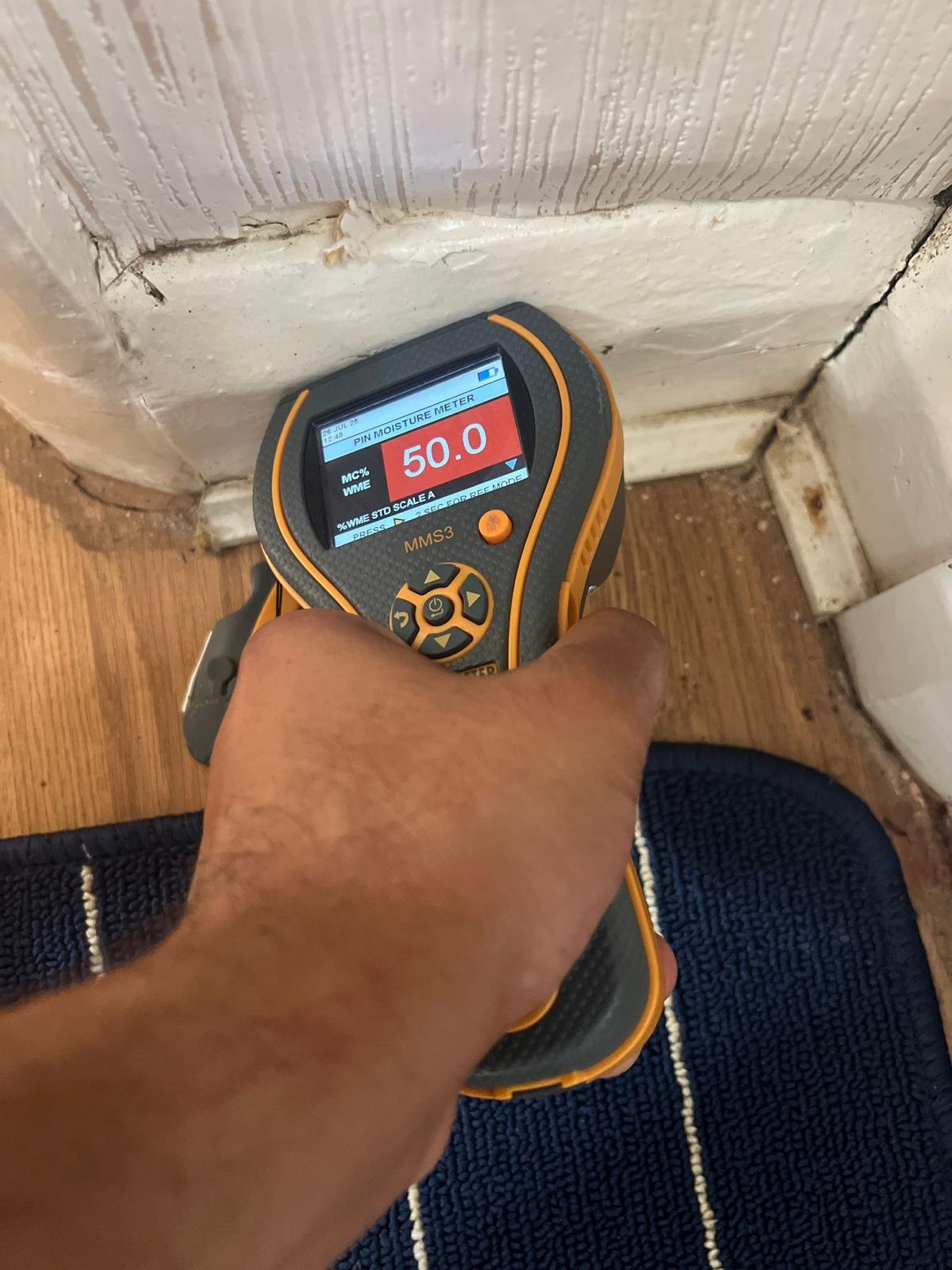
Damp is one of the most common concerns we are asked about, and one of the most frequently misdiagnosed. Getting the cause right matters, because the wrong treatment can be expensive and may even make the problem worse.
The three main types of damp
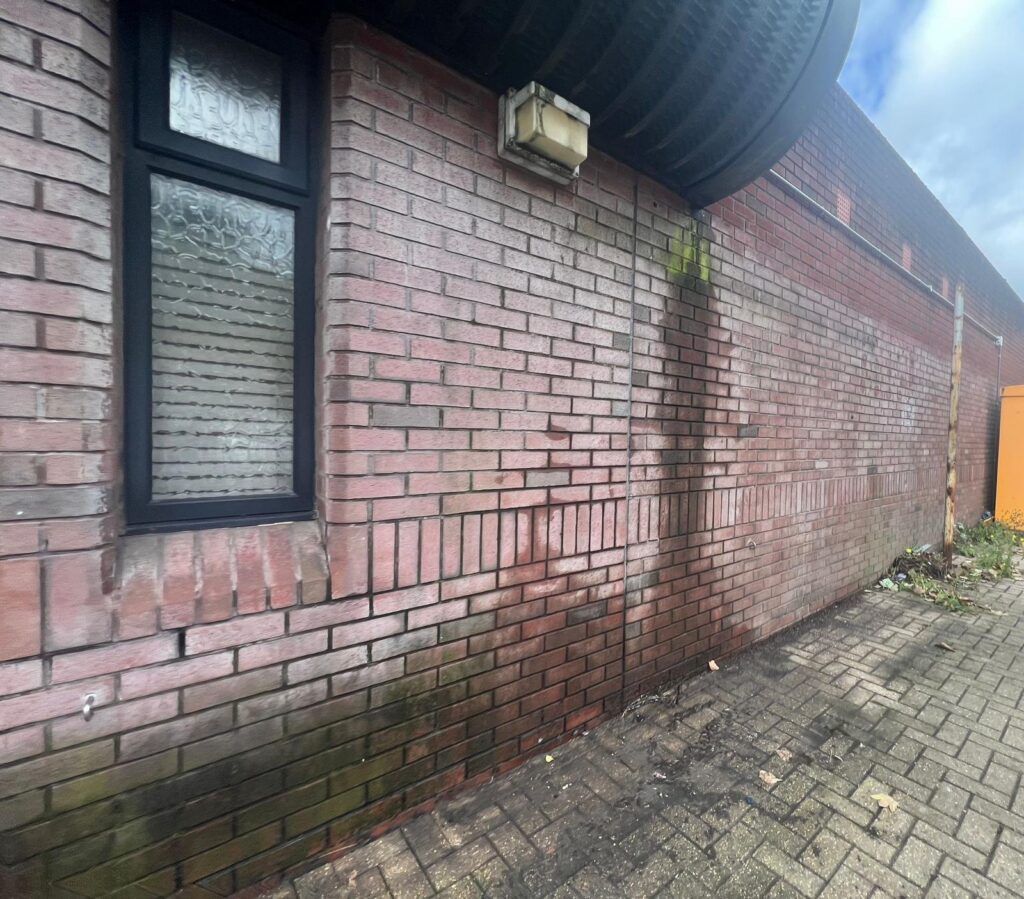
- Penetrating damp: water getting in from outside through defective roofs, gutters, downpipes, pointing, render or window seals. This is the most common type we find.
- Rising damp: ground moisture rising through walls where there is no damp-proof course or where it has failed or been bridged. Genuine rising damp is less common than many people think.
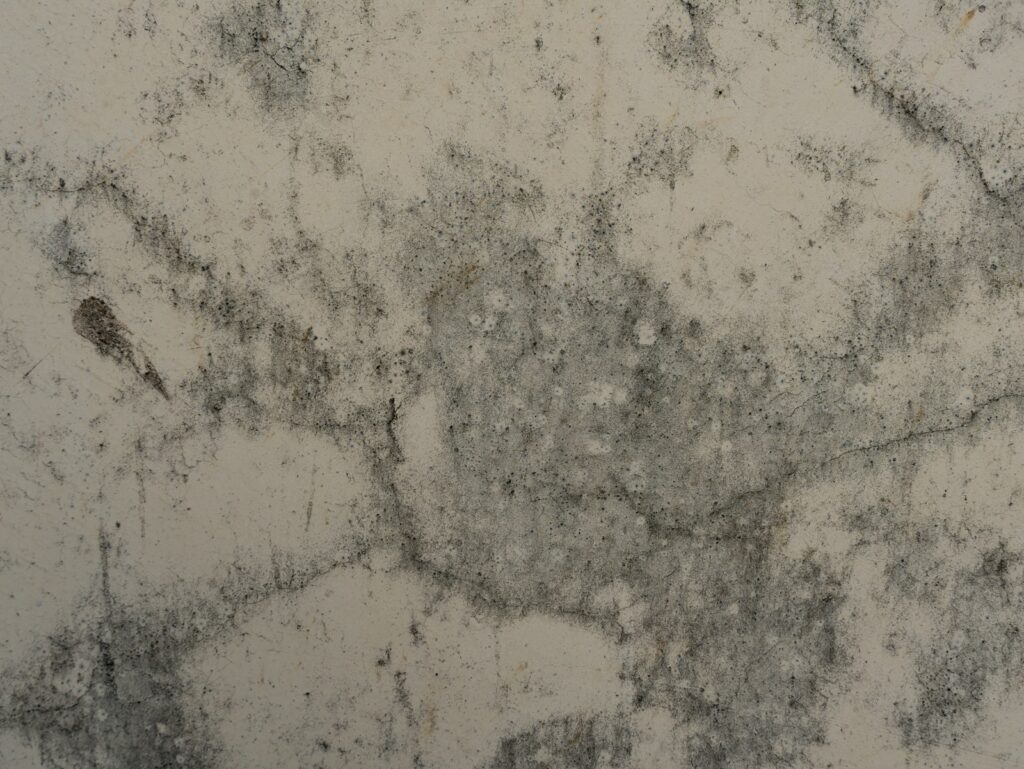
- Condensation: moisture from cooking, bathing and drying clothes settling on cold surfaces, often causing black mould around windows and in corners.
How we investigate damp
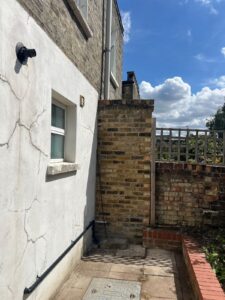
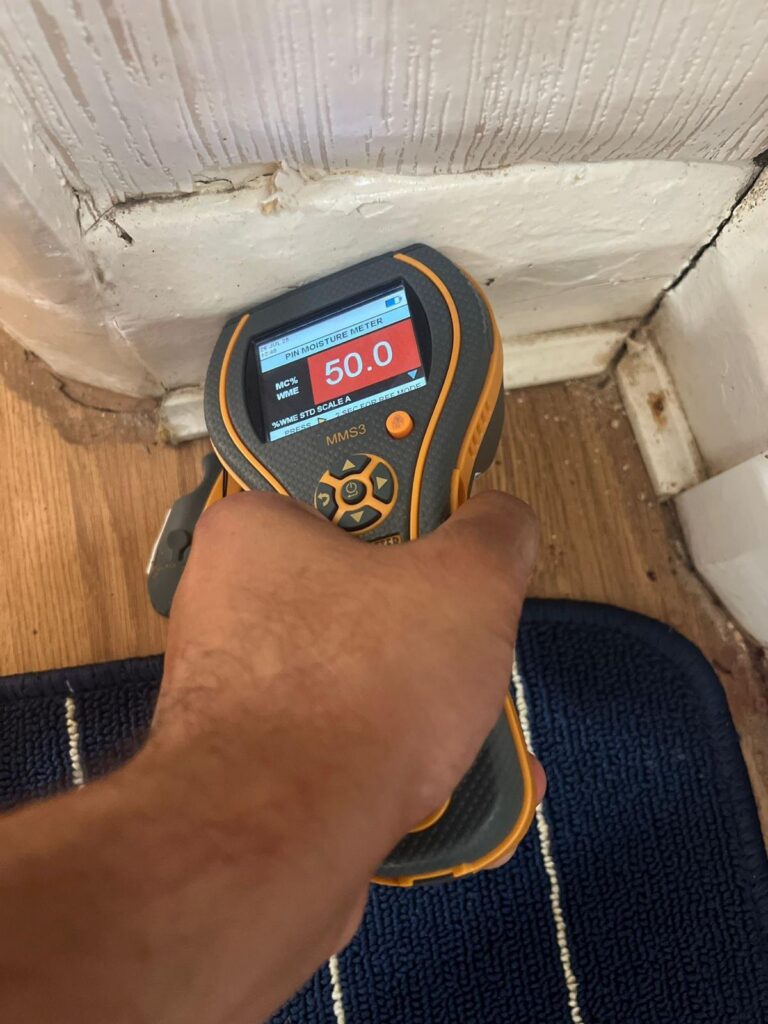
During a survey we take moisture readings across walls, floors and ceilings and look at the pattern of the readings, not just the numbers. A high reading near ground level on an external wall points to a different cause than staining below a bathroom or around a chimney breast. We then look outside for the source: blocked gutters, leaking downpipes, high ground levels, failed render or blocked airbricks.
Moisture meters are a useful screening tool, but salts in old plaster can give misleadingly high readings. Where the cause is not clear, we may recommend further investigation by a damp specialist who does not sell treatments, so you receive impartial advice.
Common causes we find
- Render or paths taken down to ground level, bridging the damp-proof course
- Blocked or buried airbricks reducing ventilation to suspended timber floors
- Leaking gutters and downpipes saturating the walls behind
- Defective chimney stacks letting water into chimney breasts
- Poor ventilation in kitchens, bathrooms and bedrooms
The right fix
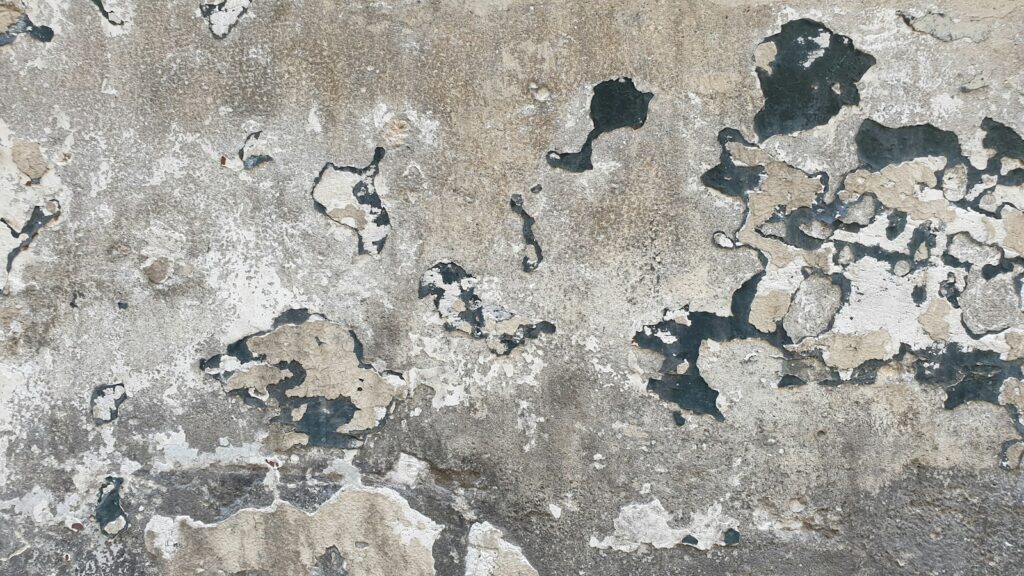
Most damp problems are solved by repairing the source: clearing gutters, lowering ground levels, repairing chimneys and improving ventilation. Expensive chemical damp-proof injections are not always necessary. A good survey helps you avoid paying for the wrong solution.
Need a survey? Call Out Group is a RICS Regulated Firm (No. 874632) carrying out RICS Level 2 and Level 3 surveys across London. Get an instant quote or call us on 020 8137 7200.